What You May Not Know About Attachment Styles
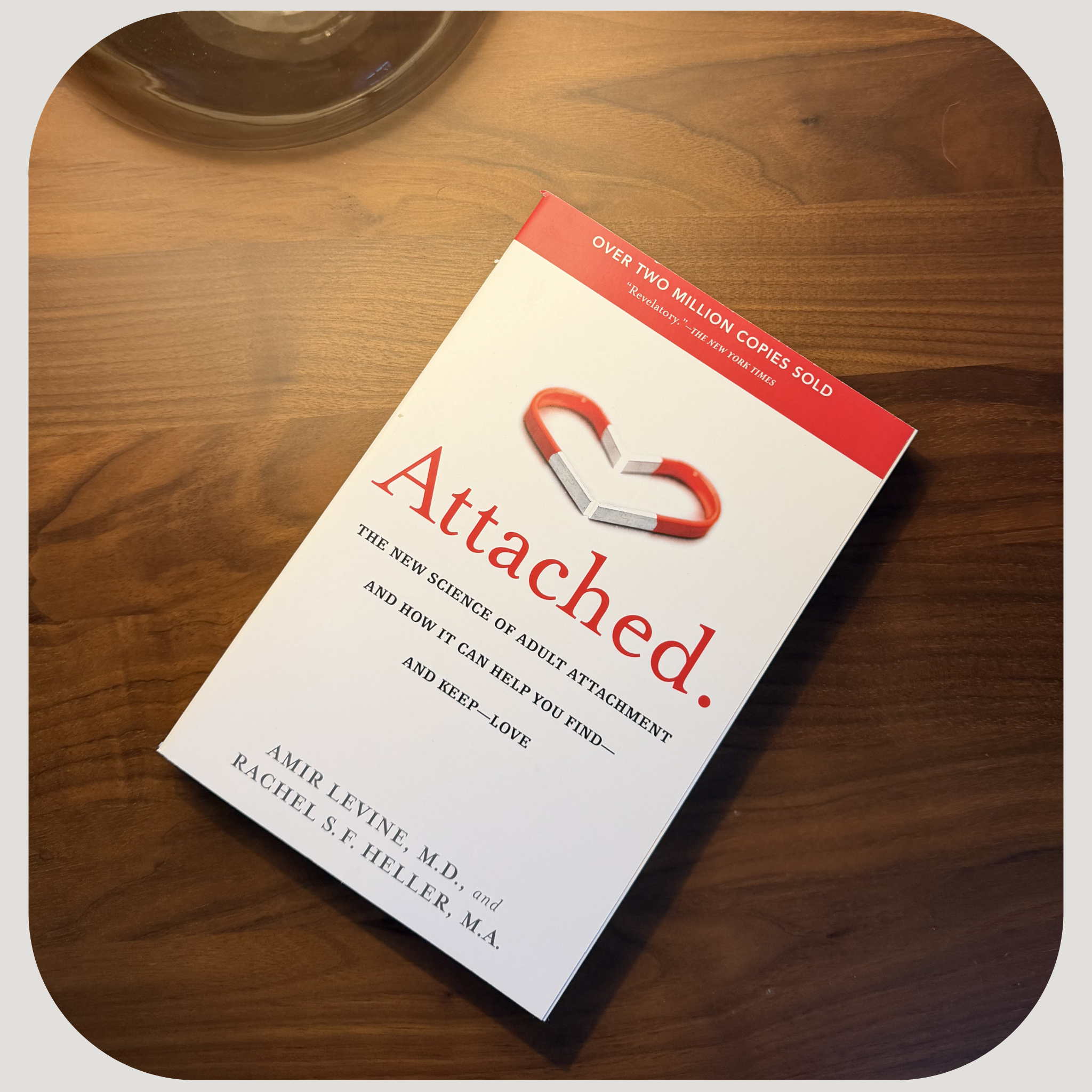
One of the books I find myself referencing frequently in therapy is Attached by Amir Levine and Rachel Heller. Even if someone hasn’t read the book, there’s a good chance they’ve encountered its language. Terms like “anxious attachment,” “avoidant attachment,” and “secure attachment” have become part of everyday conversations about relationships.
The reason this book has become so influential is simple: it gives people a framework for understanding why relationships can feel so confusing. As the authors write, “The way we behave in relationships is not random. It is predictable.”
For many readers, that realization is incredibly validating. Suddenly, the intense anxiety after a delayed text message, the urge to pull away when things get serious, or the feeling of constantly chasing reassurance begins to make sense. Instead of seeing themselves as “too much” or “not enough,” people can begin to understand the patterns driving their behavior.
As a therapist, I appreciate how accessible this framework is. It gives clients language to describe experiences they’ve struggled to put into words. It also helps me conceptualize the relational dynamics clients bring into therapy.
At the same time, I found myself resisting one aspect of how attachment theory is often discussed—not because the book promotes it, but because readers sometimes take the labels too literally. We live in a culture that loves categories. We want to know what box we belong in. Are we anxious, avoidant, or secure?
The part of Attached that I find often gets overlooked is that attachment is not static. We are not sentenced to an attachment style for the rest of our lives. Relationships shape us, trauma our interactions, and healing changes us.
Someone who developed anxious attachment because of inconsistent caregiving can move toward security through healthy relationships and corrective emotional experiences. Likewise, someone who felt secure for years may become more anxious after betrayal, loss, or significant life stress. Human beings are adaptable and we are constantly responding to our environments. That idea aligns closely with something I talk about often in therapy: flexibility.
Many of us suffer when we start seeing ourselves as fixed. “My attachment style is anxious,” “I’m just an avoidant,” or even “this is simply who I am.”
But growth rarely happens inside rigid categories; it happens in the gray areas.
What I appreciate most about Attached is not that it gives us labels. It’s that it gives us a starting point for understanding ourselves. The real work comes afterward: recognizing patterns, building awareness, and allowing ourselves to change.
If you take one thing away from this book, I hope it’s this: Your attachment style may explain where you’ve been, but it does not determine where you’re going.