What If Your Body Was Never the Enemy?
Roxane Gay is one of my favorite authors. She has a remarkable ability to write about painful, complicated experiences with honesty, nuance, and clarity. She tackles difficult subjects without sensationalizing them and invites readers into conversations that many people spend their entire lives avoiding.
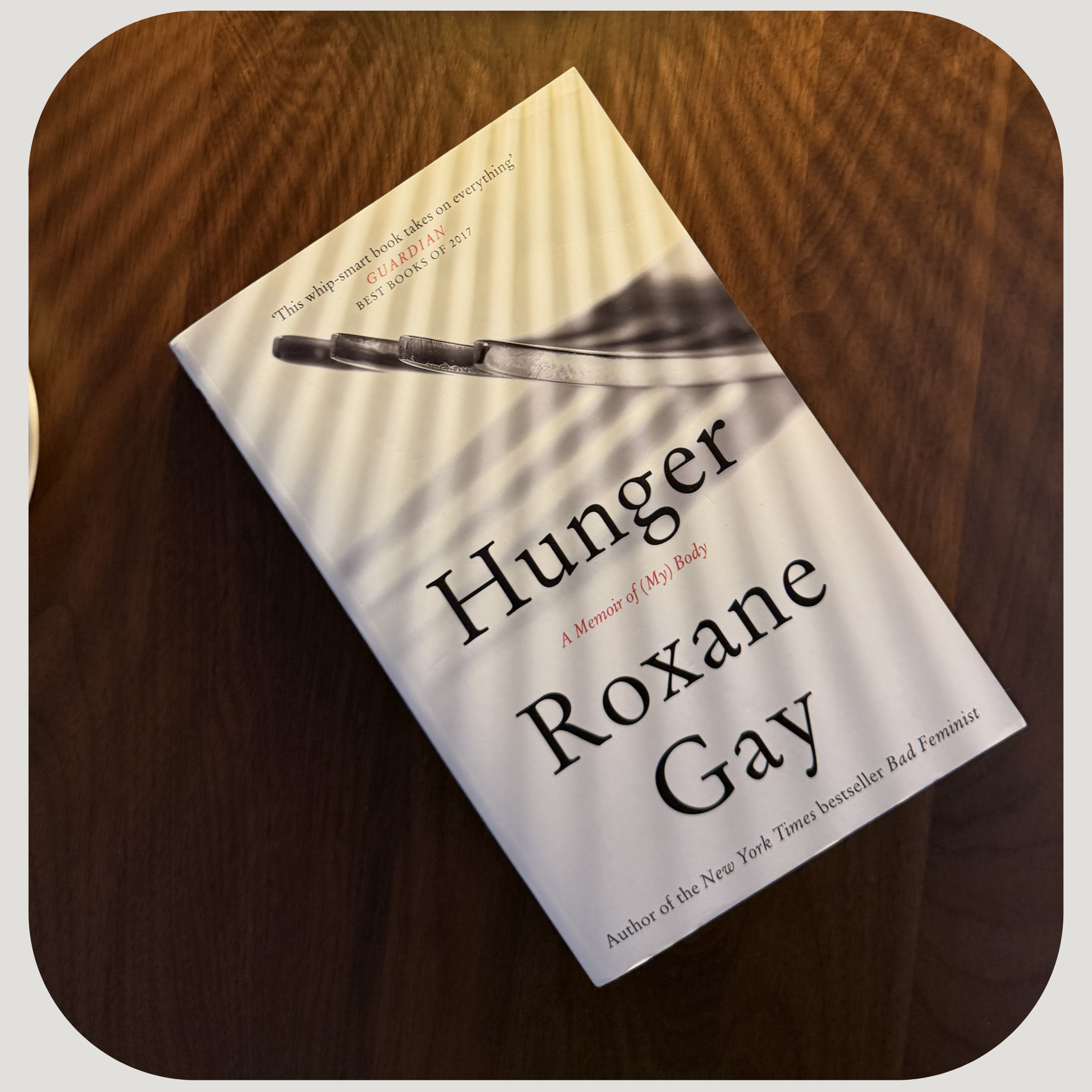
Her memoir, Hunger, is no exception. In this book, Gay writes candidly about growing up in a body she learned to hate, the relentless pressures of weight-loss culture, and the devastating sexual assault she experienced as a child. It’s a difficult read at times, but an incredibly important one.
What struck me most wasn’t the discussion of weight itself. It was the way Gay helped readers understand why.
Throughout the book, she describes how gaining weight became a form of protection. After experiencing profound trauma, her body became a shield. The weight wasn’t simply about food. It wasn’t about laziness, lack of discipline, or any of the assumptions society often makes. It was a survival strategy.
As Gay writes, “I ate and ate and ate in the hopes that if I made myself big, my body would be safe,” and this line captures something I see in therapy all the time.
Many people spend years at war with their bodies without ever asking what their bodies may have been trying to accomplish.
We often view behaviors through a lens of judgment. Why do I overeat? Why can’t I stop? Why do I avoid exercise? Why do I feel uncomfortable in my own skin? But therapy frequently reveals a different question: What was this behavior helping you survive?
Sometimes food provides comfort or a sense of control. Sometimes eating enables numbness and as Gay describes so powerfully, it also becomes protection.
The same is true for many of the things we criticize about ourselves. Anxiety, avoidance, people-pleasing, emotional walls, perfectionism—these often begin as creative attempts to navigate painful experiences.
Although that doesn’t mean these strategies continue serving us forever, it does mean they deserve understanding before they deserve judgment.
One of the saddest realities I encounter as a therapist is how many people spend decades rejecting their bodies. They speak about themselves with a cruelty they would never direct toward another human being. They wait to love themselves until they lose weight, look different, or become someone else.
Hunger challenges that mindset.
Reading Gay’s story reminded me that our bodies are often carrying stories we haven’t fully understood yet. They hold our grief, our fears, our survival strategies, and our attempts to stay safe in a world that hasn’t always felt safe.
The goal isn’t necessarily to love every part of ourselves every moment of every day; instead the goal is to stop treating ourselves as the enemy.
Our bodies may not always reflect what we wanted them to be but more often than not, they reflect what they needed to do to help us survive.