What If Boundaries Are More Nuanced Than You May Think?
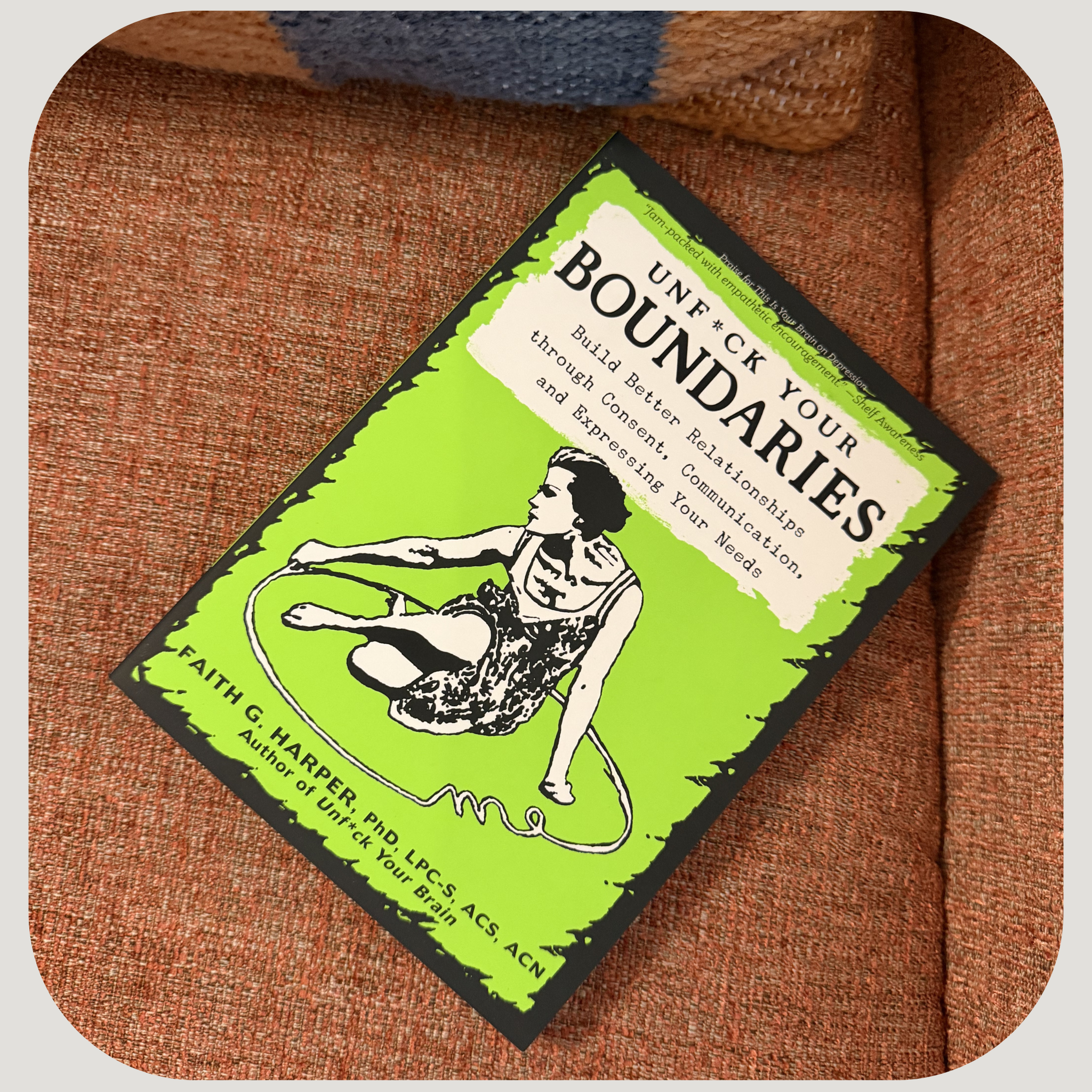
One thing I appreciated about Unf*ck Your Boundaries by Faith G. Harper is that it approaches boundaries with a lot more nuance than most internet discourse does. Online, boundaries are often framed as rigid ultimatums: “Protect your peace,” “Cut them off,” or “If they cross a boundary once, leave.” While boundaries absolutely matter, real relationships are usually much messier than that.
One part that stood out to me was the author’s stance on testing people. The book talks about how many of us unconsciously create little emotional traps for others: expecting them to read our minds, withholding communication to see if they’ll chase us, or silently hoping they’ll magically notice what we need without us saying it directly. The problem is that tests set everyone up to fail.
As a therapist, I see this all the time. Someone says, “Well, if they really cared, they would know.” But relationships are not mind-reading competitions. Healthy connection requires clarity, vulnerability, and honesty. When we test people instead of communicating with them, we usually end up reinforcing our own fears rather than creating closeness.
Another idea from the book that really stayed with me was the discussion about how sometimes it’s important to uphold the relationship rather than the boundary itself. That idea initially challenged me because therapists (and social media) talk so much about maintaining boundaries no matter what. However in practice, life is often much more complicated.
Take in-laws, for example. Maybe your ideal boundary would be complete distance or confrontation, but enforcing that boundary rigidly could deeply strain your marriage or family system. That doesn’t mean you abandon yourself entirely. It means you weigh the emotional cost, the context, and the long-term goals of the relationship. Sometimes the healthiest choice is not the most absolute one.
I appreciated that the book leaves room for flexibility instead of turning boundaries into moral purity tests.
That’s something I think we miss culturally right now: boundaries are not just walls. They’re conversations and they’re negotiations. They’re ongoing adjustments between two imperfect people trying to coexist while still honoring themselves.
And honestly? That’s a lot harder (and a lot more human) than simply saying “cut them off.”