What Would It Mean to Get Understanding Instead of Solutions?
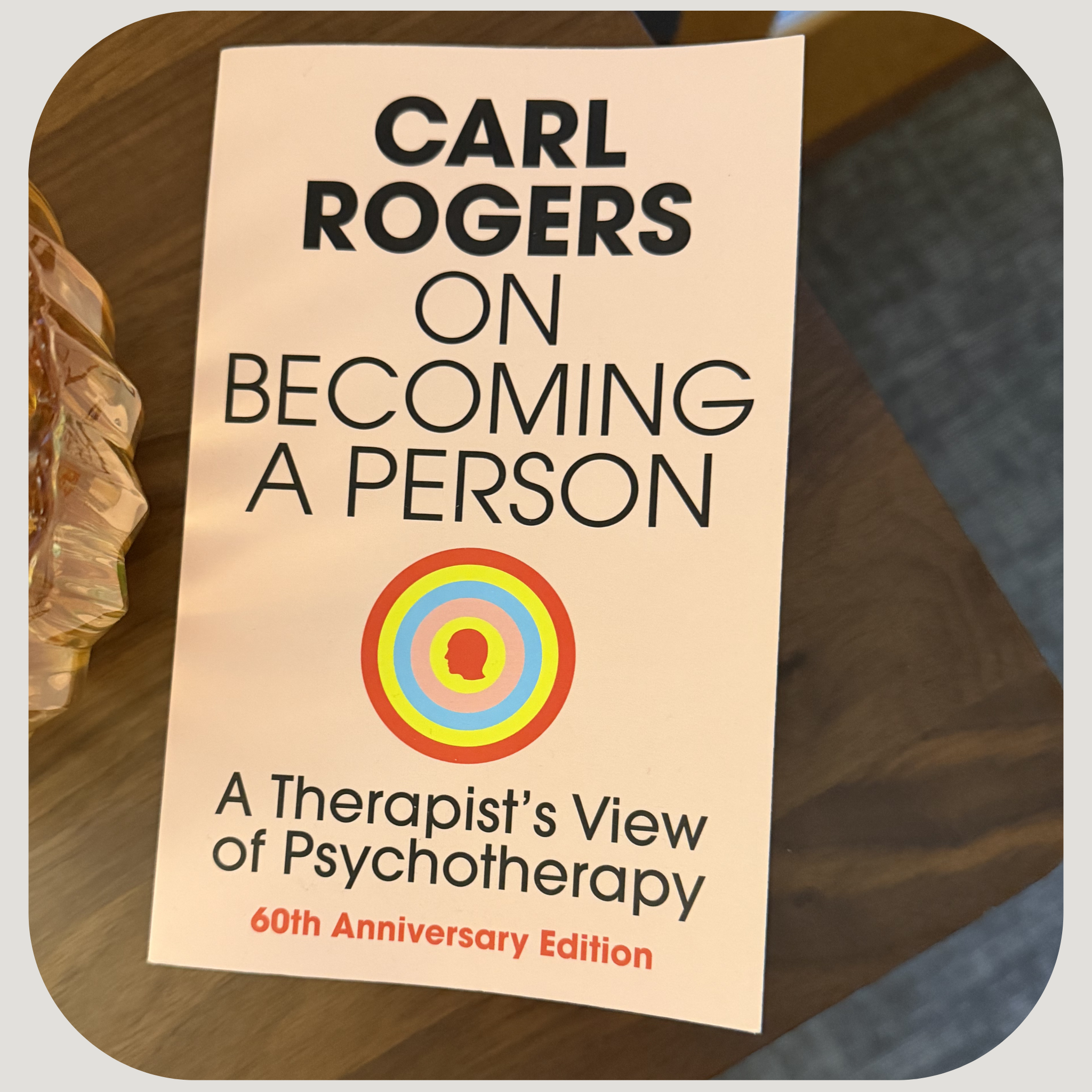
There are some books that don’t just resonate with me, they affirm. On Becoming a Person by Carl Rogers is one of those books for me. It feels less like learning something new and more like someone putting language to something I’ve always believed about people.
At its core, Rogers’ work is simple but radical: When people are truly accepted, they begin to change.
This isn’t because they’re pushed or because they’re given a checklist, but because acceptance creates the safety needed for growth.
That hits at the heart of something I’ve wrestled with in my own practice.
There’s this quiet pressure in therapy to do more: to have action items, worksheets, and measurable outcomes. In fact, Cognitive Behavioral Therapy-style structure that says progress should look like homework and behavior change, and while that has its place, Rogers reminds us that change doesn’t always come from doing, it often comes from being seen.
He challenges the idea that we, as therapists (or even as people), should shape others into who we think they should be.There’s a fine line between helping someone grow and subtly trying to mold them into an image of our choosing.
Instead, Rogers invites a different stance. He stresses the importance of trusting people to set their own agenda, believing that somewhere deep down, people know what they need, and accepting that they are not broken.
There’s this underlying fear in the world that if people are left to their own devices, they’ll spiral; they’ll make the wrong choices, ruin their lives, and fall apart. But Rogers asserts (and I’ve seen in my own experience with clients) the opposite.
People are trying.
People are adapting.
People are doing the best they can with what they’ve been given.
When they’re struggling, it’s not because they’re fundamentally flawed, it’s because they haven’t worked through something yet. That’s a very different lens and I believe that it changes everything.
It means that therapy isn’t about directing someone’s life. It’s about creating a space where they can hear themselves clearly enough to decide what comes next.
More often than not though, when people feel safe, accepted, and understood, they move toward growth on their own and in their own way.