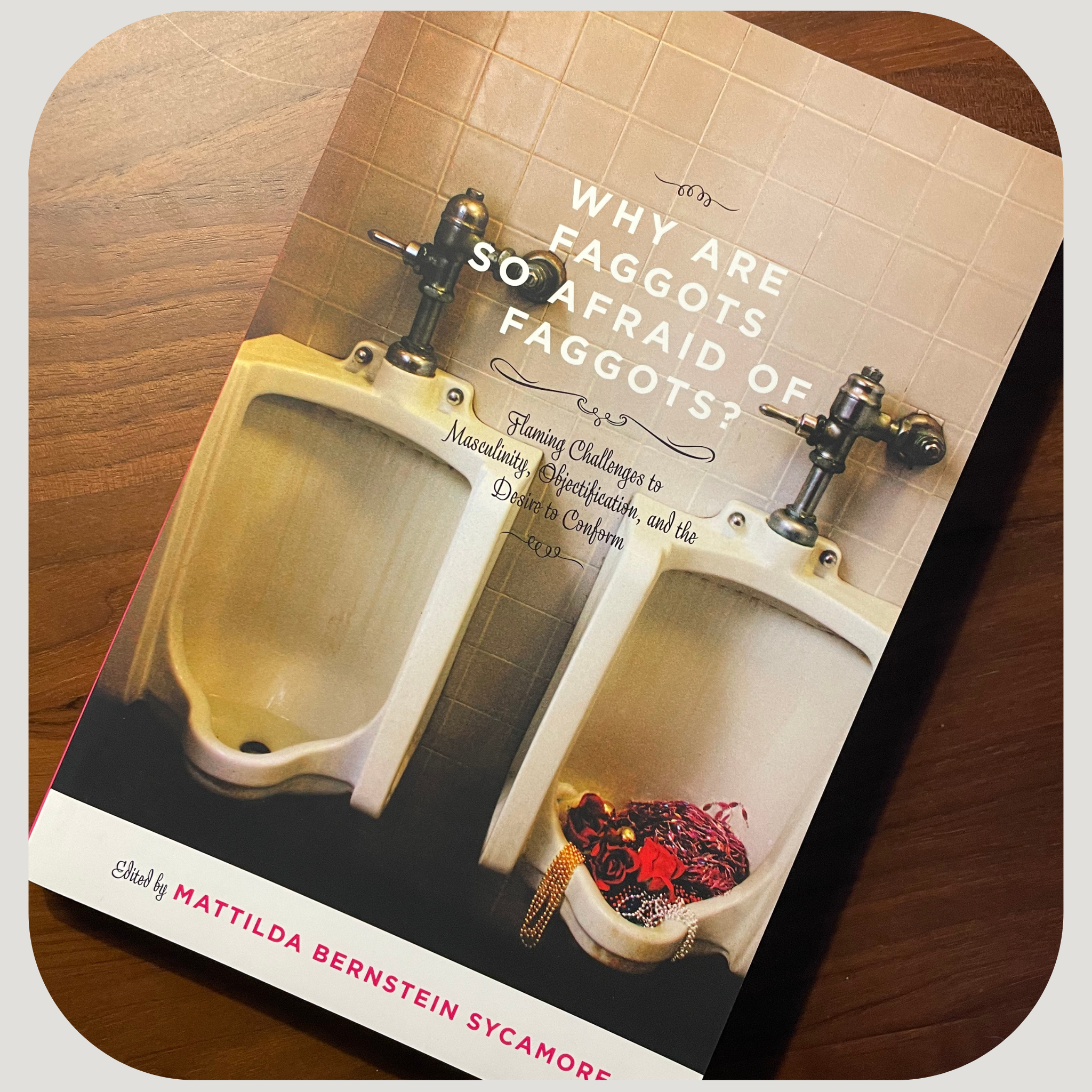
What Lies Beneath the Frivolity of Queer Culture
Reading Why Are Faggots So Afraid of Faggots? by Mattilda Bernstein Sycamore felt like holding up a mirror to queer culture—one that doesn’t always flatter but is deeply necessary. The central theme that struck me was how much homophobia exists inside the gay community itself. It reminded me of that eerie line from the film When a Stranger Calls: “the call’s coming from inside the house.” That sense of danger not from the outside world, but from within, captures the vulnerability this book exposes.
As a young gay man, I found myself reflecting on how these dynamics have shaped the culture I grew up in. Sycamore’s anthology doesn’t shy away from hard truths, especially those rooted in the AIDS epidemic. The book reminds us that the devastation of that time carved out the landscape of modern queer identity and activism. The essays reveal not just loss, but resilience, creativity, and the push for community care when institutions failed.
“Why do we build a gay world that replicates the worst aspects of the straight world, when the reason we came here in the first place was to escape it?”
At the same time, the book confronts how progress in civil rights has been uneven, and how assimilation into mainstream culture sometimes means replicating harmful hierarchies (body shaming, racism, and exclusion) within queer spaces themselves. It’s a sobering reminder that progress doesn’t erase the work still left to do.
What I appreciated most was how the book balanced pain and possibility. It sheds light on fractures within the community but also insists on imagining something better. As a therapist, this resonates with the process of sitting with clients as they share painful truths about themselves or their relationships. Just as Sycamore asks us to see the fractures within our community, therapy asks us to sit with what feels uncomfortable inside ourselves, without rushing to fix or smooth it over. Healing often begins with honesty; acknowledging the shadows within, while also imagining what growth and connection could look like on the other side.
This book expanded my awareness of the struggles that shaped the spaces I now inhabit. It challenged me to think critically about the kind of queer future we’re still building and the responsibility each of us has to make sure the “call inside the house” becomes one of love, not of fear.