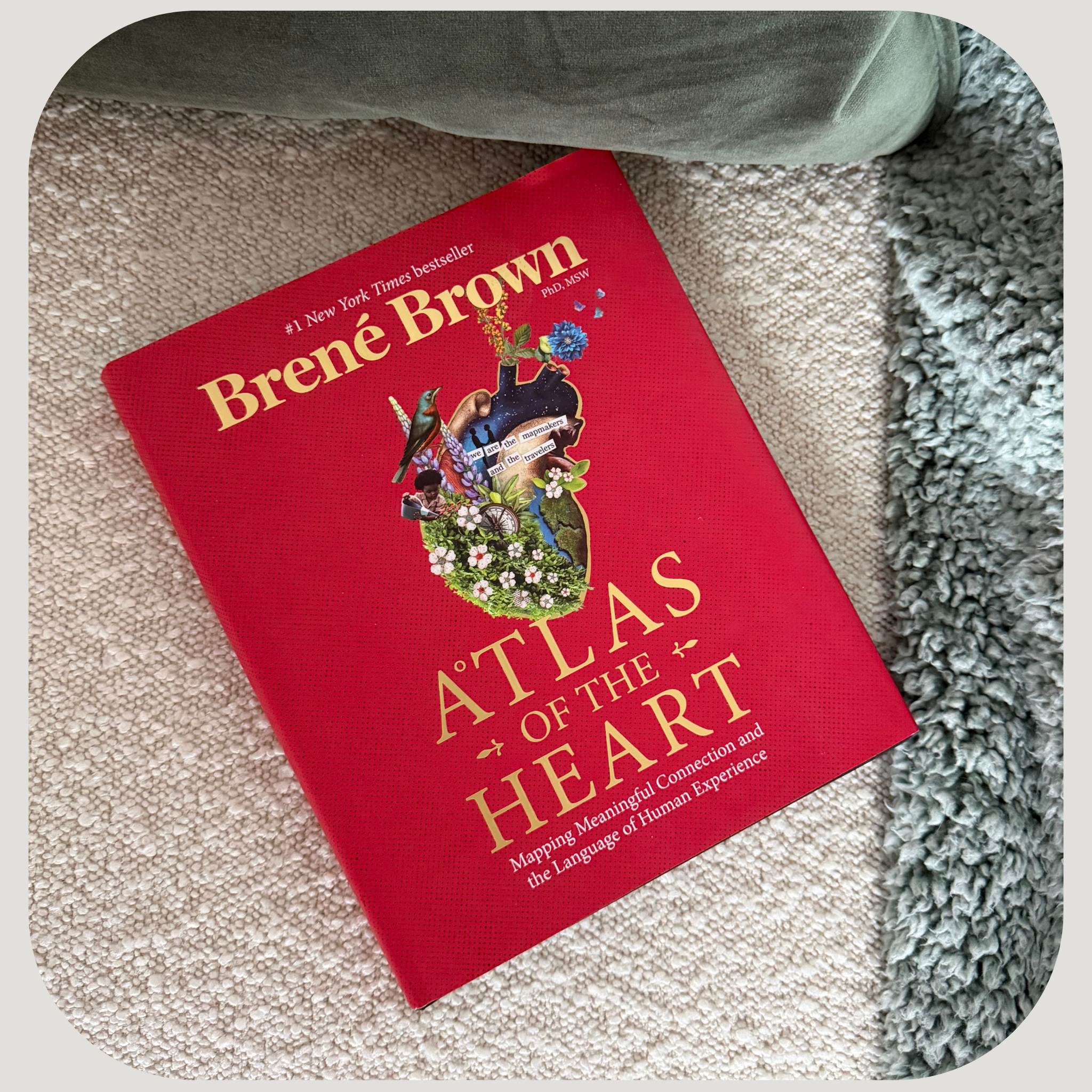
What Mapping Our Emotions Can Teach Us About Being Human
In Atlas of the Heart, Brené Brown does something deceptively simple and profoundly important: she gives us a shared language for our emotional lives.
This book resonated deeply with me as a therapist because so many of the people I work with are profoundly disconnected from their feelings. Not disconnected in a dramatic way, but in a quiet, practical way. They know something is wrong, but they don’t know where to begin. When asked how they feel, they say “fine,” “bad,” or “stressed,” and then hit a wall.
One of the first and most important tools we have in therapy is language. Words matter and naming an emotion doesn’t trap it; it actually creates movement. That’s where Atlas of the Heart shines; Brown treats emotions like coordinates on a map, offering vocabulary for experiences that are often felt but rarely articulated.
What I especially appreciate is how carefully Brown distinguishes between emotions that are often collapsed into one another. Shame and guilt, for example, are frequently treated as interchangeable but they are fundamentally different experiences. Guilt, as Brown explains, is about behavior: I did something bad. Shame is about identity: I am bad. That distinction matters clinically. Guilt can motivate repair and accountability. Shame, on the other hand, tends to shut people down, isolate them, and keep them stuck.
The same is true for envy and jealousy. Jealousy involves fear of losing something we already have (often tied to relationships). Envy is about longing for something we lack and believing it diminishes our worth. When clients can tell the difference, the emotional landscape suddenly makes more sense. What once felt like a moral failing becomes an understandable human response.
In therapy, this kind of emotional clarity is powerful. When someone can say, “I’m not feeling guilt; I’m feeling shame,” or “I’m not jealous, I’m actually feeling envious,” we’re no longer wandering blindly. We’re working with a map and once you can see the terrain of your inner world more clearly, you can navigate it with more compassion and less self-judgment.
Atlas of the Heart doesn’t just help people name feelings, it helps them feel less broken for having them and, in many ways, that is where healing begins.