What We Owe the Generation That Grew Up Online
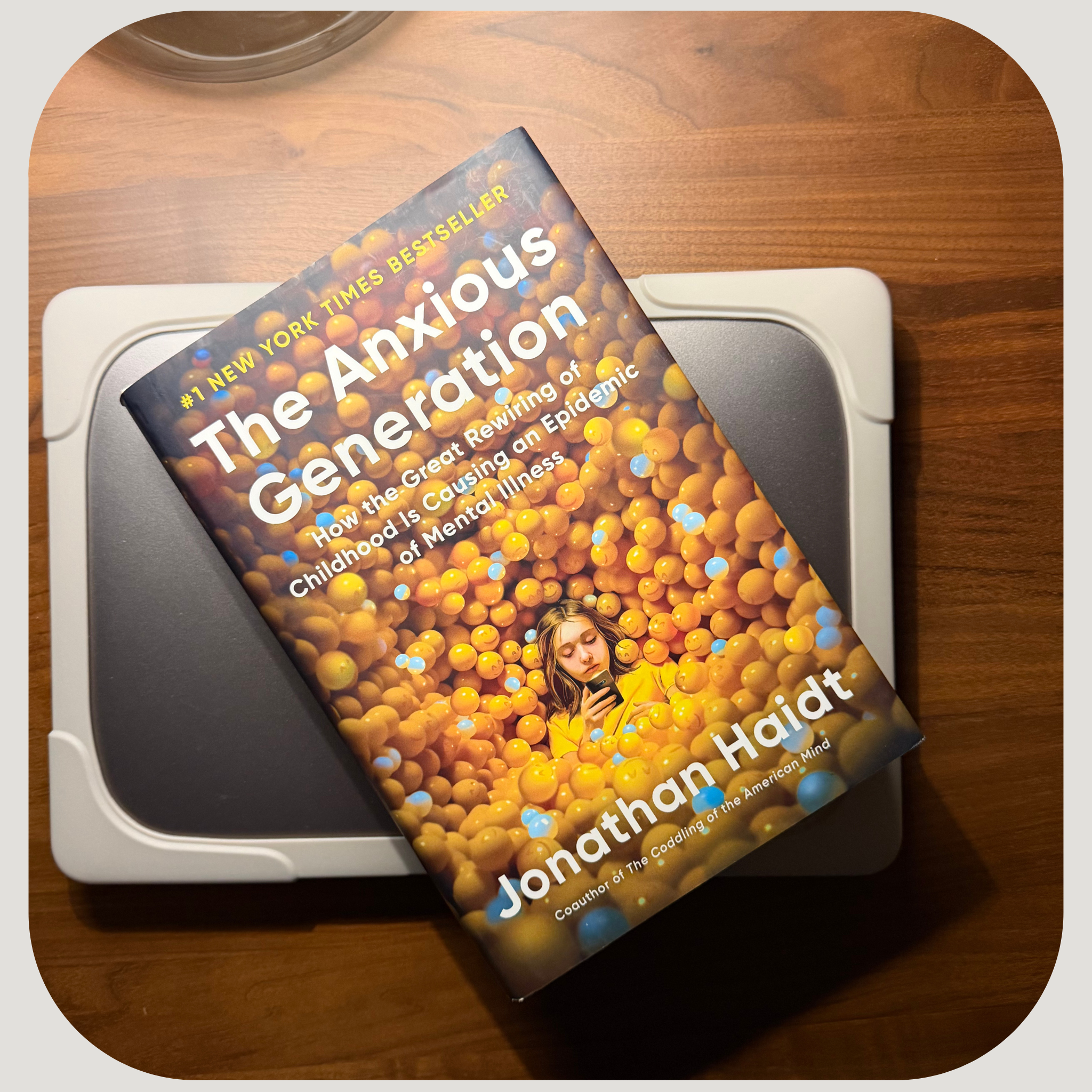
When I think back on The Anxious Generation by Jonathan Haidt, what stands out most isn’t a sense of alarm, it’s a sense of context. This book doesn’t ask us to shake our fists at younger generations or dismiss them as “fragile.” Instead, it invites us to look honestly at the world they grew up in and ask a harder, more compassionate question: What would any of us look like if this had been our nervous system’s training ground?
One of the most fascinating elements of the book is how clearly it outlines the different ways boys and girls are impacted by the internet and social media. While the themes are complex, the takeaway is simple: the pressures are not evenly distributed and the consequences show up differently. Girls tend to internalize (comparison, self-surveillance, anxiety, depression) while boys are more likely to externalize or disengage, often retreating into isolation, gaming, or numbness. Neither response is a failure of character. They’re adaptations. As Haidt states “ee didn’t just give kids phones. We gave them constant comparison, infinite feedback, and an audience that never goes away.”
As a therapist, I see this play out every week. My Gen Z and younger clients are navigating emotional terrain that looks nothing like what my millennial or Gen X clients faced at the same age. Their inner worlds are shaped by relentless visibility, algorithmic reinforcement, and social pressure that doesn’t shut off when school ends. It’s becoming increasingly apparent that there is no true “off switch.”
What feels especially important here is avoiding the trap of moralizing this reality. Younger generations didn’t choose this environment. They inherited it, often without the media literacy, emotional scaffolding, or developmental protections that older generations slowly built over time. Many of them are trying to discern what’s real, what’s performative, and what’s expected of them while their brains are still wiring themselves for identity and safety.
In therapy, this shows up as chronic anxiety, perfectionism, identity confusion, and a profound fear of getting it wrong. Not because they’re weak but because the stakes feel impossibly high when everything is public, permanent, and quantified.
What The Anxious Generation ultimately reinforces for me is something I already believe deeply: mental health struggles don’t exist in a vacuum. They’re responses to environments. And when the environment changes this dramatically, our expectations and our compassion have to change too.
This book isn’t about blaming parents, schools, or kids. It’s about recognizing that we are mid-experiment, raising humans in conditions evolution never prepared us for. The work now isn’t to shame the outcomes, it’s to slow down, rebuild connection, and help young people develop internal anchors in a world that constantly pulls their attention outward.