What Reclaiming A Feminist Slur Teaches Us About Power, Shame, and Self-Trust
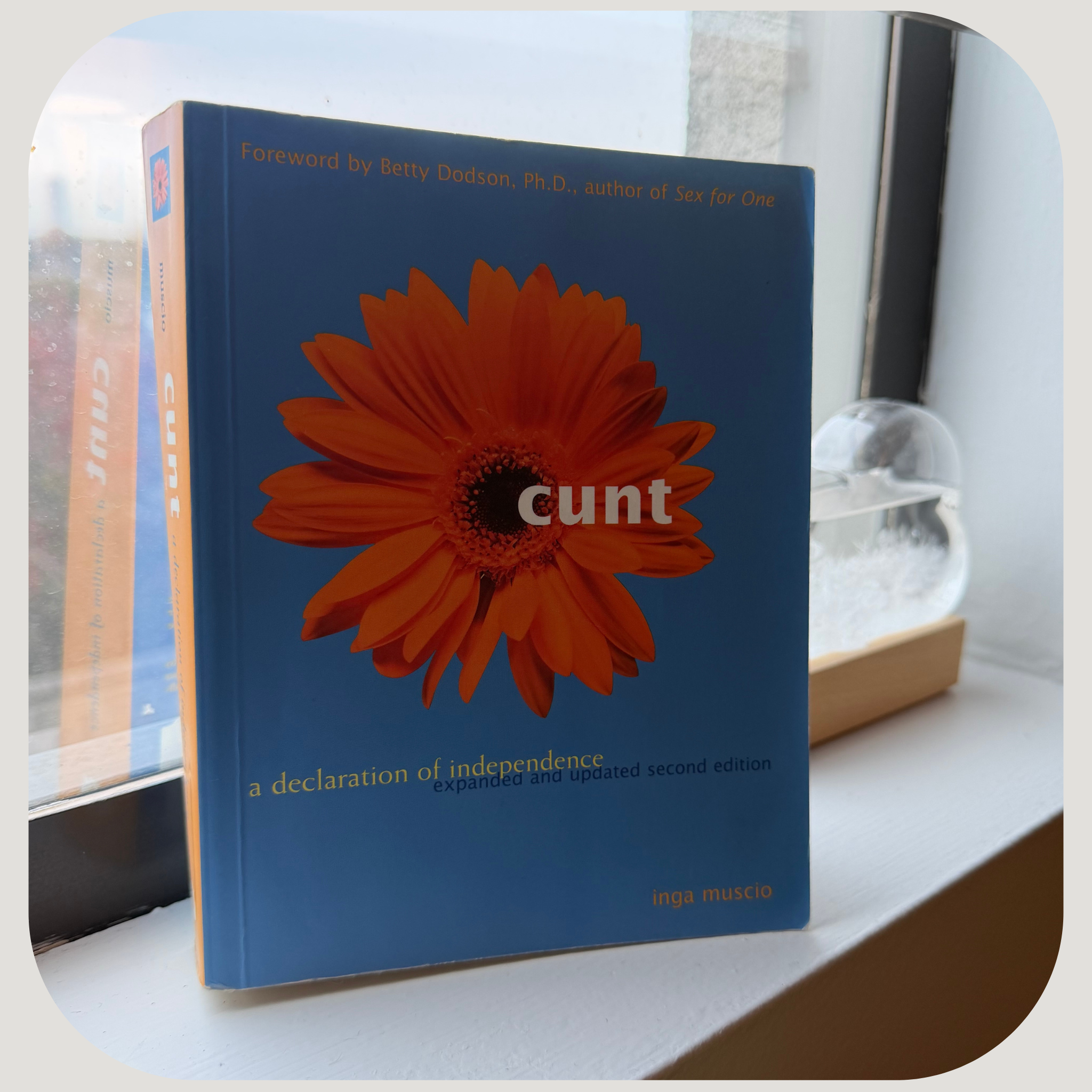
When I think back on Cunt: A Declaration of Independence, what lingers isn’t a tidy list of chapters—it’s the permission the book gives. Permission to question why bodies—especially femme bodies—are policed, shamed, and regulated. Permission to reclaim language that was designed to wound and permission to trust ourselves again after years of being told not to.
Muscio’s work is unapologetic, provocative, and intentionally disruptive. It refuses politeness as a prerequisite for worth. At its core, the book argues that liberation begins when we stop outsourcing our authority over our bodies, our desires, our anger, or our pleasure to systems that benefit from our silence.
“If you don’t define yourself for yourself, you’ll be defined by someone else—and probably inaccurately.”
That line lands hard in therapy rooms. So many people arrive already fluent in self-doubt. They’ve been trained to minimize, to accommodate, to ask for permission. Muscio invites readers to do the opposite: to name what has been taken, to grieve it, and then to reclaim it loudly.
What I love about this book (and why it fits so naturally with Good Vibes Therapy) is that it doesn’t just talk about empowerment as a mindset, it frames it as a practice. Reclaiming power means noticing where shame lives in the body. It means understanding how cultural narratives seep into our nervous systems. It means learning to say no without apology and yes without justification.
And here’s where the therapy lens matters: Muscio isn’t asking for perfection or constant confidence. She’s asking for relationship—with your body, your intuition, your anger, your joy. In therapy, we often explore how people learned to disconnect from these parts for survival. This book honors that survival and gently (sometimes not-so-gently) challenges us to choose something more expansive when it’s safe to do so.
If you’ve ever felt estranged from your body, unsure of your worth, or tired of carrying shame that isn’t yours, this book offers a mirror and a match. A mirror to see what’s been internalized and a match to burn down what no longer serves.
Reclaiming power isn’t about being fearless. It’s about being anchored. About trusting yourself enough to listen inward before looking outward. That’s work we do every day in therapy. Sometimes healing starts with the quiet work of self-compassion and sometimes it starts with reclaiming a perceived dirty word and deciding it belongs to you after all.