What If You Don’t Actually Need Fixing?
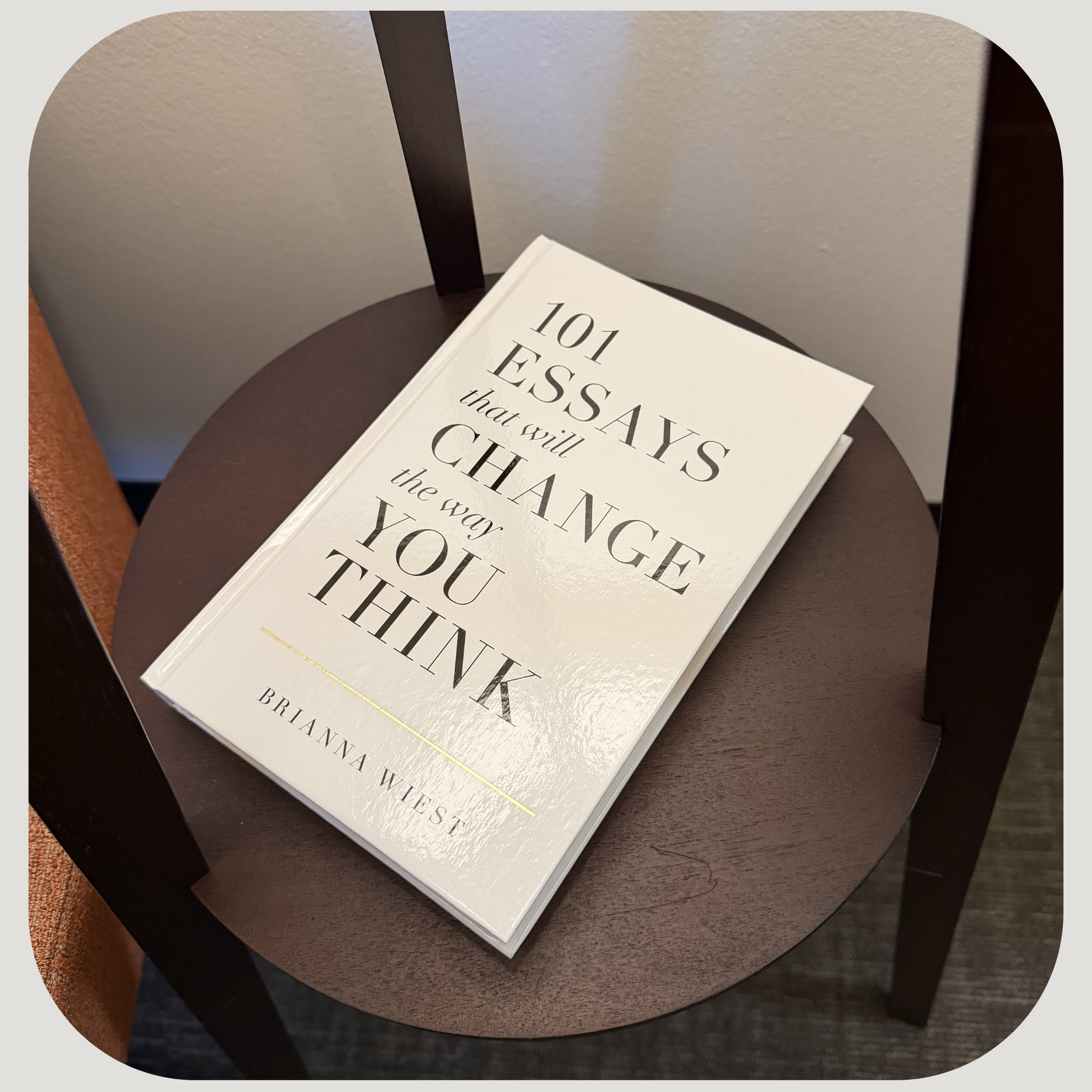
If you’ve spent any time in the self-help world, you’ve probably heard of 101 Essays That Will Change the Way You Think by Brianna Wiest. It’s one of those books that people love and honestly, I get why. It’s a quick, digestible read with a lot of thought-provoking ideas about how our thinking shapes our experience. Honestly though, I went into this one with a bit of skepticism.
Anytime I see something that promises to “change your thinking” or “fix your mindset,” a part of me pauses. Realistically, underneath that promise is often the implication that something about you is broken and needs fixing; that’s not something I subscribe to whether it’s in therapy or in daily life.
That said, there is a lot to appreciate here.
One of the strongest through-lines in this book is the idea that our thoughts matter not in a “just think positive and everything will be fine” way (which, to be fair, shows up at times), but in a more reflective, awareness-based way. The book invites you to notice your patterns, question them, and gently shift your perspective when it’s helpful. For instance, Wiest asserts that “you don’t have to control your thoughts. You just have to stop letting them control you.”
That’s where I found the most value: not in trying to override thoughts, but in changing your relationship to them.
Here’s the thing: humans are complex. We’re not just walking thought machines where you swap out a negative belief and plug in a positive one and suddenly everything works. We carry history, emotion, attachment, trauma, identity, among a multitude of other things. So while shifting thoughts can help, it’s rarely the whole story.
What I really appreciated, though, was the quieter message woven throughout the book: acceptance.
Acceptance of where you are.
Acceptance of what you feel.
Acceptance of the fact that you won’t always have control.
That, to me, is where real change happens.
There’s also a strong mindfulness element: being present, noticing what’s happening internally without immediately reacting to it and that aligns so closely with what we do in therapy. Not forcing change, but creating awareness. Not working to fix yourself, but to better understand yourself.
I assert that you’re not broken, you’re responding in ways that make sense given your experiences and when you approach yourself from that place, I find that’s when things actually start to shift.
If you pick this book up, I’d say go into it like I did: take what resonates, leave what doesn’t, and don’t feel like you need to “think your way” into becoming a better version of yourself.
You’re already a whole person.
This is just about learning how to be with yourself a little differently.