What A Nickelodeon Memoir Teaches Us About Approval, Eating Disorders, and the Cost of Being “Good”
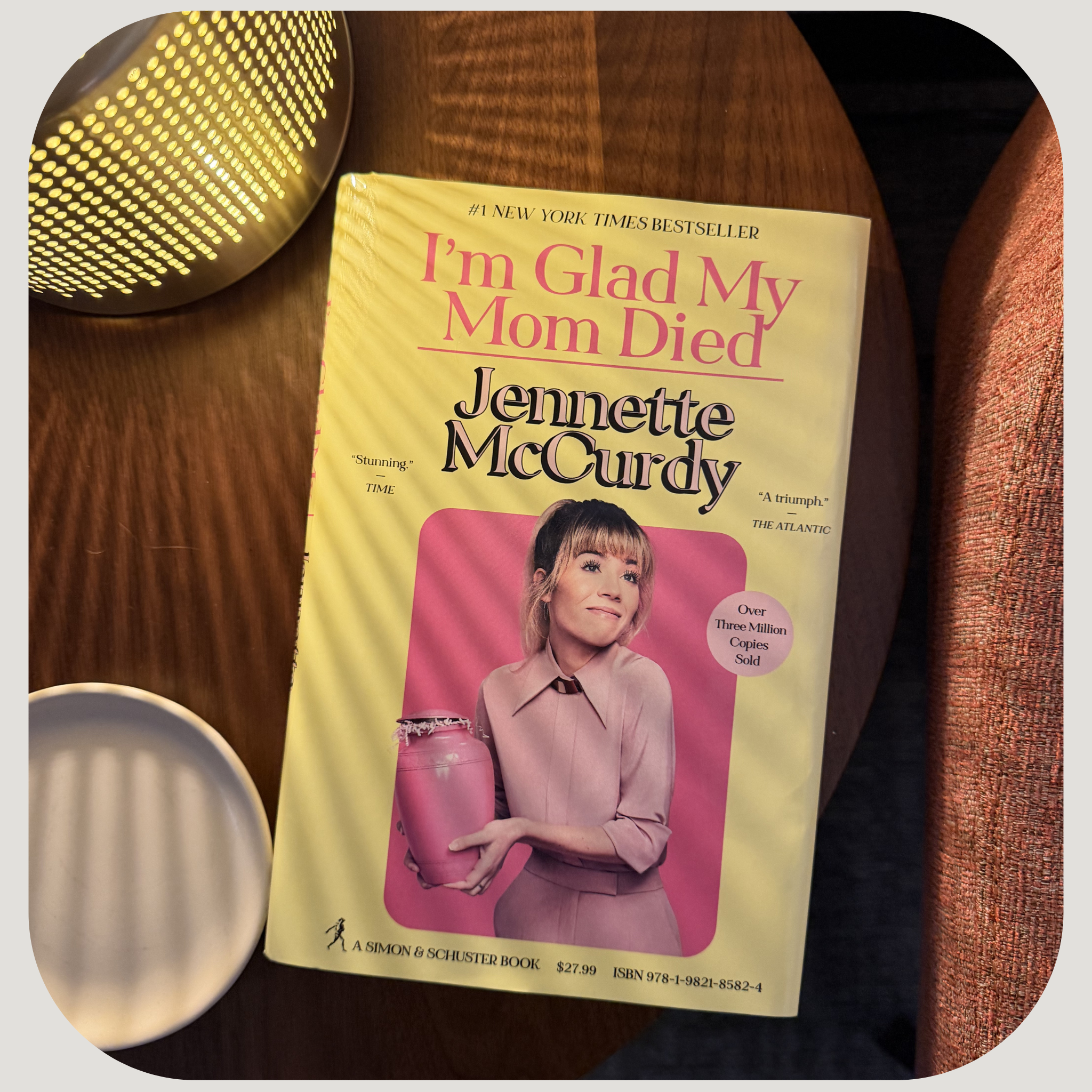
When I picked up I’m Glad My Mom Died by Jennette McCurdy, I expected this book to be heavy, specifically because I have my own grief surrounding the loss of my mother. What I didn’t expect, however, was how deeply it would speak to something I see constantly in therapy: the quiet desperation to earn love through performance.
McCurdy describes learning early that safety, happiness, and connection came from making her mom proud. Approval felt like oxygen. She shares how devastating it was when that approval disappeared and how she eventually realized her mother was never truly satisfied, no matter how hard she tried.
That landed hard for me because when a child learns that love is conditional, they don’t stop trying… they just try harder.
Eventually, that striving turns inward. Her eating disorder became another way to regain control and feel “good enough.” What stood out to me most was how honest she is about what disordered eating actually looks like. She details not just dramatic moments, but the daily counting, restricting, purging, and negotiating with food. She talks about how the behaviors themselves become the relief and the cycle becomes familiar, predictable, and almost comforting.
As a therapist, that matters.
So many clients feel ashamed that they can’t “just stop.” This book shows clearly that eating disorders aren’t about vanity, they’re about regulation, survival, and control when everything else feels unsafe.
McCurdy also names something that often goes unspoken: how confusing it is to grieve someone who caused so much harm. She candidly discusses reconciling the feelings surrounding loving someone and resenting them at the same time; missing them while also feeling freer without them.
That complexity lives in a lot of people and you don’t need a famous childhood or extreme circumstances for this pattern to exist.
What this means for therapy is simple but powerful: many of us learned that connection comes from being pleasing, productive, or perfect. When that belief gets wired early, it shows up later as people-pleasing, burnout, body struggles, or deep insecurity. Healing isn’t about blaming parents, it’s about recognizing the strategies that once kept us safe and gently updating them.
I’ll absolutely be bringing this perspective into sessions, especially with clients navigating self-esteem and disordered eating. I never want to pathologize, but instead to normalize. To help people see that these behaviors made sense once and now, we get to build new ways of feeling safe.